FOR SMEs — END-TO-END SUPPORT
AMA handles the investigation and compilation of the dossier within the agreed scope, even when the company does not have its own specialist compliance team.
For timber importers, AMA verifies and corroborates the information relating to an operation, structures the importer’s dossier and prepares the information needed to complete the DDS.
DDS: Due diligence statement, to be submitted through the European Union’s TRACES system
AMA organises the information needed to complete it. The operator validates and submits it.
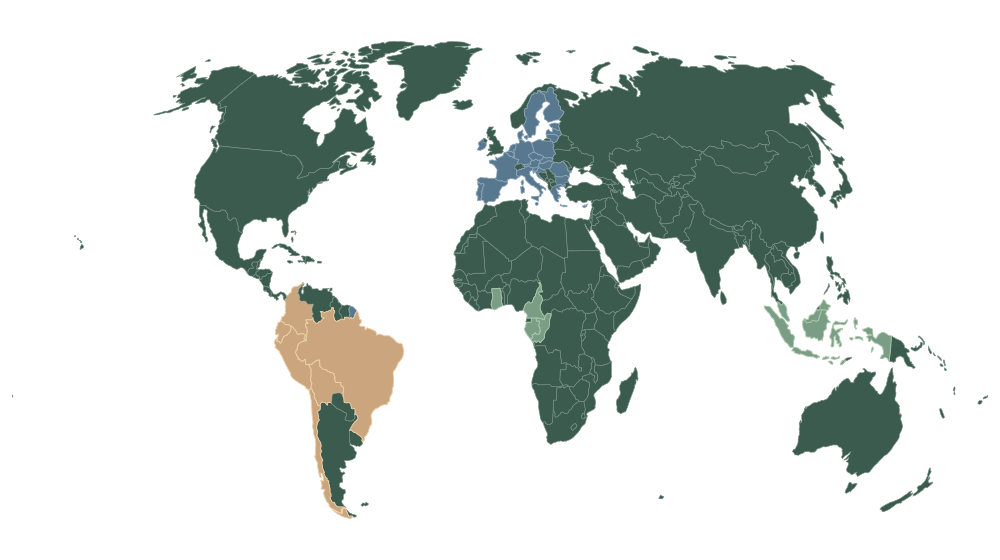
Is your origin not yet covered? AMA develops its capabilities according to market significance, importers’ requests and the establishment of local capabilities. Please contact us.
Brazil · Peru · Ecuador · Colombia · Bolivia · Chile
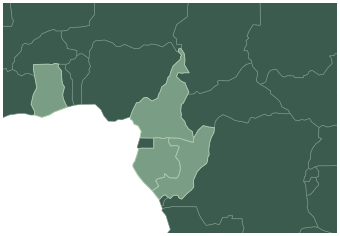
Cameroon · Gabon · Republic of the Congo · Ghana · Indonesia · Malaysia
HUMAN EXPERTISE, SUPPORTED BY TECHNOLOGY
Agroforest Monitoring Agency is neither an automated compliance SaaS platform nor DDS data-entry software.
Our work is to investigate tropical timber import operations. We examine documents, cross-check sources, analyse origins and volumes, identify inconsistencies and compile documented due diligence dossiers. Field checks complement our analyses.
We use digital tools and artificial intelligence to improve our efficiency. However, findings, analyses and conclusions remain under human oversight.
AI is a good servant, but a poor master.
AMA handles the investigation and compilation of the dossier within the agreed scope, even when the company does not have its own specialist compliance team.
AMA supports in-house teams with additional checks, further investigation of sensitive issues and an independent perspective on operations.
Three complementary checks on the same operation: documentary consistency, geospatial origin and volumes along the chain.
Parties, authorisations, documented relationships, consistency, limitations and discrepancies.
Origin, area covered, changes in apparent forest cover over several years and consistency of the information.
Compare the volumes documented at different stages of the chain and verify their consistency with the lot examined.
The basic audit includes documentary checks, traceability, geospatial analyses and volume consistency. A physical visit to the forest harvesting site is an optional service quoted separately, depending on access, location, logistical resources and the time of year.
AMA verifies the parties involved, flows and lot traceability throughout the processing chain.
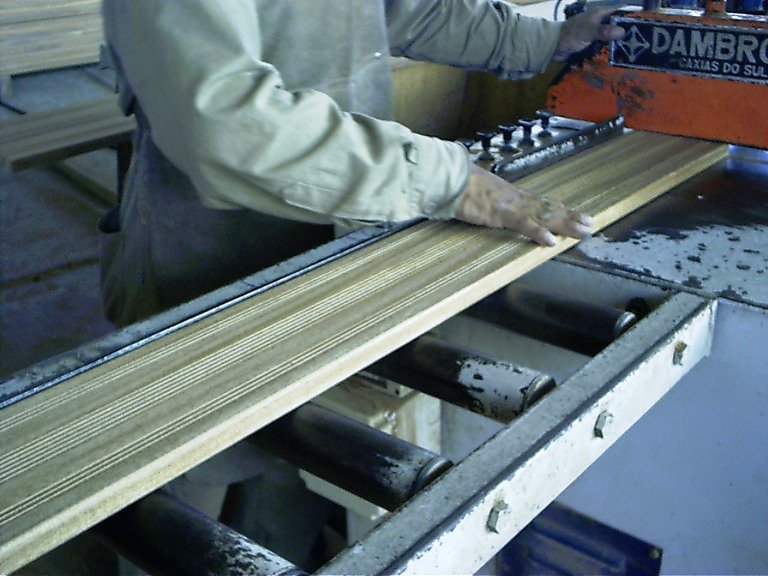
Under its protocol, AMA schedules visits to the relevant physical facilities: sawmills, kilns and storage sites. Visit records and supplier undertakings are valid for one year.
Trading offices without physical facilities are not subject to these visits. A visit to the forest harvesting site remains a separate service, quoted individually.
A common reference linked to the complete AMA verification dossier.
WoodPassport® links the operation, lot and container to their complete AMA verification dossier. Access to the dossier according to assigned permissions is planned for a future client area, which is not yet operational.
WoodPassport® Authority is the documentary summary that accompanies the lot’s export documents and presents the main checks performed. On request, labels bearing the common reference and a QR code may also be affixed to packages.
The basic AMA audit and WoodPassport® are charged at a fixed fee.
WoodPassport® · historical example Demonstration specimen — historical reference retained.
Turn your due diligence work into a commercial advantage with your clients.
WoodPassport® Origin is intended for your clients, their business customers and, where relevant, the public, particularly in large retail stores. It presents selected information on timber origin and the checks performed in a simple, concise way, showing that a responsible process of origin verification has been carried out.
It therefore turns the EUDR / RDUE requirement into a means of transparency, differentiation and commercial promotion.
WoodPassport® Origin is an optional service charged at an additional fixed fee: a dedicated, customisable web page presenting selected, authorised, non-confidential information, with hosting for one year.
WoodPassport® Origin may also take the form of a printable sheet or a QR code linking to the dedicated page. This QR code may be placed on a commercial document — invoice, delivery note or accompanying document — on a point-of-sale display or directly on a shelf, allowing customers to access selected public information on origin and the checks performed.
Supplier identities, prices, invoices and sensitive commercial information remain restricted to the importer’s confidential audit dossier. They are published neither in WoodPassport® Authority nor in Origin. These presentations are not certifications; Origin does not replace the DDS.
WoodPassport® Origin Concept preview of a page accessible by QR code.
SERVING TIMBER IMPORTERS
WHAT THE EUDR SAYS
“Operators shall exercise due diligence in accordance with Article 8 prior to placing relevant products on the market or exporting them […].”
Due diligence includes, in particular:
Information & documents → Risk assessment → Risk mitigation
The DDS is based on this due diligence IT DOES NOT REPLACE IT
AMA compiles a credible, independent and usable dossier.
AMA examines each operation, reconciles the evidence and delivers a clear dossier: what is established, what remains to be clarified and the evidence supporting the findings.
The supplier provides the information. AMA examines it. The importer / operator makes its decisions and remains responsible for its statement.
The European importer is AMA’s sole client, commissioning party and payer. Suppliers and exporters participate in the checks free of charge: they do not pay AMA or provide it with any commission. This financial separation helps safeguard the independence of checks and prevent conflicts of interest.
In the event of an inspection or subsequent enquiry, AMA remains available without a time limit to provide documentary clarification on an operation already investigated, strictly within the scope of the original assignment.
These clarifications concern the documents examined, checks performed, findings, reservations and conclusions recorded in the audit dossier. They help the importer understand and explain the evidence on which AMA’s analysis was based.
An example of a subsequent inspection
AMA delivers a structured, usable dossier. The operator submits its DDS on the basis of its due diligence.
The timber is imported and then marketed. The dossier and supporting evidence are retained in accordance with the arrangements agreed for the assignment.
An inspection takes place. The inspector questions the existence of a sawmill mentioned in the supply chain.
Depending on the material retained and agreed arrangements, AMA can retrieve the documents, sources and checks carried out at the time of the operation.
The evidence shows that the sawmill existed when the export took place and ceased operating eight months later.
AMA remains available without a time limit to explain the checks, findings and conclusions of an operation already investigated, within the scope of the original audit.
The EUDR is a regulation, not a certification. AMA helps importers document and structure their due diligence process; the importer / operator remains responsible for its decisions and statement. AMA does not issue EUDR certification.
Agroforest Monitoring Agency bases its basic audit on documentary investigation, traceability, geospatial analyses and volume consistency. Relevant facility visits complement checks according to AMA’s arrangements; a forest harvesting site visit is a separate, individually quoted option.
Our approach also considers risk indicators relating to the environment, labour rights, human rights and compliance with applicable laws.
Evidence-based findings
Documentary, field and geospatial checks.
Independence and confidentiality
No involvement in production, trading or transport.
Broader risk perspective
Documentary consistency, physical chain and ESG indicators.
Importer’s responsibility
Our findings strengthen the dossier without replacing it.
A structured dossier, documented checks and conclusions whose scope is clearly established.
AMA brings examined documents, sources and verification results together in a traceable presentation. Established facts, reservations and points requiring further investigation are presented separately.
Dossier modules
Authentic covers. Modules and their scope depend on the operation and checks performed.
01 · Documentary checks
In this example, the documents examined establish a consistent documentary chain from the declared forest origin to the timber lot prepared for export.
The examination results in a favourable documentary opinion, while identifying non-blocking observations that remain documented in the report.
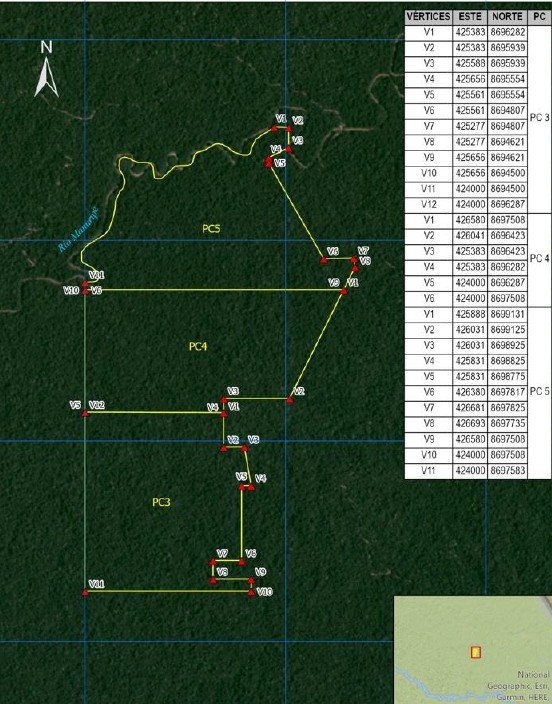
02 · Geospatial analysis
This chart was produced by observing and comparing satellite images of the same area on different dates. It documents apparent changes in forest cover between 2020 and 2023.
03 · Volume checks
AMA examines the consistency of declared timber quantities at different stages of the operation, from forest origin to the lot prepared for export.
Documentary reconciliation and volume analyses identify possible discrepancies, assess their significance and present reasoned conclusions.
04 · Supporting documents
A structured support to identify sites, observable operations and information to verify during an intervention.
Photographs and captions presented in a structured annex.
AMA structures findings and dossier information. The operator retains responsibility for its decision and for validating and submitting the DDS.
Documents provided by the supplier or exporter are examined to identify their scope, consistency and points requiring additional verification.
Titles, authorisations, licences, tax information and transport documents are analysed to understand the declared legal framework and possible areas of uncertainty.
Relevant facility visits are organised according to AMA’s arrangements. A forest harvesting site visit is a separate, individually quoted option; no physical visit is automatically performed for every operation.
AMA examines relevant site documents and schedules, according to its arrangements, visits to pertinent physical storage or processing facilities: sawmills, kilns, warehouses and other chain units.
Documentary information, field observations, transport data and declarations are compared to identify discrepancies, inconsistencies or risk indicators.
Findings are structured in a dossier usable by the importer, with a clear summary of verified information, observed limitations and the associated risk level.
Declared origin is examined using documents and geospatial analyses. A harvesting site visit may complement these checks as a separately quoted option, depending on access, location, logistics and season.
Transport documents are examined to check consistency of flows between the origin area, processing sites and container loading.
Sawmills, kilns, planing areas, machining units or storage sites are checked according to the chain’s actual organisation: grouped at one site or spread across several locations.
Shipping documents, lot information and container-related evidence are examined to link the export dossier to the verified chain.
This standard methodology aims to corroborate the actual physical chain, from declared origin to shipment, combining field checks, sites’ operational existence and documentary consistency between links.
All field findings are dated, geolocated and documented.
No involvement in production, trading or transport.
Data and information handled securely and confidentially.
Documented links are compared with available sources, identifying corroborated evidence and verification limitations.
Observation of origin areas, changes in surface areas and certain indicators useful for verification.
When a field check is performed, geolocated surveys corroborate the locations actually verified.
Documents submitted are examined for consistency, scope and correspondence with other available sources and, where appropriate, physical observations.
POAs, harvesting permits, business registers, roles of companies involved and other administrative evidence are checked.
Exchanges with the parties concerned contextualise information and corroborate the findings collected.
=
Findings strengthened by cross-checking available sources, with clearly identified limitations.
Independence
No commercial involvement in the verified chain.
Confidentiality
Secure and confidential handling of information collected.
Cross-checked evidence
Documentary, field and geospatial data cross-checking.
ESG risk perspective
Identifying indicators relating to the environment, labour rights, human rights and compliance with applicable laws.
They are neither official EUDR certification nor an automatic guarantee of compliance; they provide independent analysis, verification and evidence.
The EUDR governs the placing and making available of relevant products on the European market and their export. Due diligence combines the collection and examination of information with applicable checks. Obligations vary according to the company’s role: not every party is required to submit a new DDS.
Information collection
For operators: products, quantities, timber species, origin, suppliers and evidence of legality; downstream, traceability information.
Geolocation
Identify production plots. For eligible micro or small primary operators, the postal address of all the relevant plots or the production establishment may replace geolocation.
Risk assessment
Operators verify information and assess risk, subject to the simplified regime under Article 13.
Risk mitigation measures
If risk is not negligible or zero, the operator must reduce it to that level before placing products on the market or exporting them.
Due diligence statement
DDS for operators subject to Article 4. Eligible micro or small primary operators are subject to a single simplified declaration, updateable following a major change, with an identifier distinct from a DDS reference. Due diligence remains required. No new DDS is required solely because of the role of downstream actor or trader.
Regulation (EU) 2023/1115
The EUDR establishes harmonised rules intended to prevent certain products placed on the European Union market from being associated with deforestation or forest degradation.
Objective
Relevant products must be deforestation-free, comply with the relevant legislation of the country of production and be covered by the required declaration: a DDS or a simplified declaration, depending on the applicable regime.
Relevant products
Timber, cocoa, coffee, rubber, soya, oil palm, cattle and derived products listed in Annex I. Customs codes and exclusions determine the scope.
Who is affected?
Operators: first placing on the market or export. Downstream actors and traders: distinct obligations, without a new DDS arising from that role. Adapted provisions for SMEs; a specific regime for eligible micro or small primary operators producing their own products in low-risk countries.
Application timetable
According to role, size and relevant products.
30 December 2026
General deadline, notably for medium and large operators.
Timber products covered by the EUTR: the same date, including for micro and small businesses, subject to the transitional measures in Article 37.
30 June 2027
Deferral for operators who are natural persons, micro or small, established as such by 31 December 2024, excluding products already covered by the EUTR.
Products added in 2026: certain new categories are subject to 30 December 2027 (amended Annex I).
Position as at 17 October 2026 · Article 38 · EUR-Lex · European Commission
AMA investigates the operation’s documents, examines documentary and geospatial information and performs the checks specified in the assignment.
It identifies inconsistencies and reservations, compiles a documented dossier and prepares information useful for the DDS where required.
The operator retains its regulatory responsibilities: it validates the information and conclusions, makes decisions within its role and carries out the applicable formalities.
Where a DDS is required, it ensures submission through the European information system, directly or through an authorised representative, without transfer of responsibility.
Compiling the dossier and submitting the DDS are two distinct stages. AMA reports are neither EUDR certification nor a guarantee of compliance.
The EUDR / RDUE is a European regulation, not an official certification scheme. There is no official EUDR certification issued by the European Union that automatically guarantees an operation’s compliance.
Private certifications may contribute to information collection and risk assessment; they do not replace the operator’s due diligence. AMA performs independent, documented checks and does not issue regulatory certification.
Collecting documents is not enough: the operator must examine the information and document the checks applicable to its role.
Field checks and GPS surveys according to the operation’s needs and the scope of the assignment.
Field observations
Geospatial analysis
Structured dossier
GPS surveys
Verifiable data
Risk summary
Agroforest Monitoring Agency provides independent documentary, field and geospatial verification evidence to strengthen the evidence dossier.
— ABOUT AGROFOREST MONITORING AGENCY
Agroforest Monitoring Agency was founded by a timber professional with direct experience of tropical supply chains, from forestry operations to exports to European and North American markets.
After many years in Peru’s timber sector, its founder also supported South American companies in their development, notably through government advisory assignments relating to export promotion.
This experience enables Agroforest Monitoring Agency to understand the sector’s operational realities, constraints, sensitive issues and the risks that can arise between documents, field operations and export.
Agroforest Monitoring Agency also relies on qualified field professionals: forestry experts and engineers, documentary verification specialists and professionals who have worked with or within public and private organisations.
Some professionals have up to 25 years’ experience in forest management, field verification, documentary compliance and responsible management standards.
This combination of commercial experience, field knowledge and technical expertise enables Agroforest Monitoring Agency to produce independent, contextualised checks that are useful to importers.
We use cookies that are necessary for the operation and security of the website. With your consent, some external services may also be enabled, including Google reCAPTCHA to protect our forms against automated submissions. You can accept, reject or customise your choices, and change them at any time.